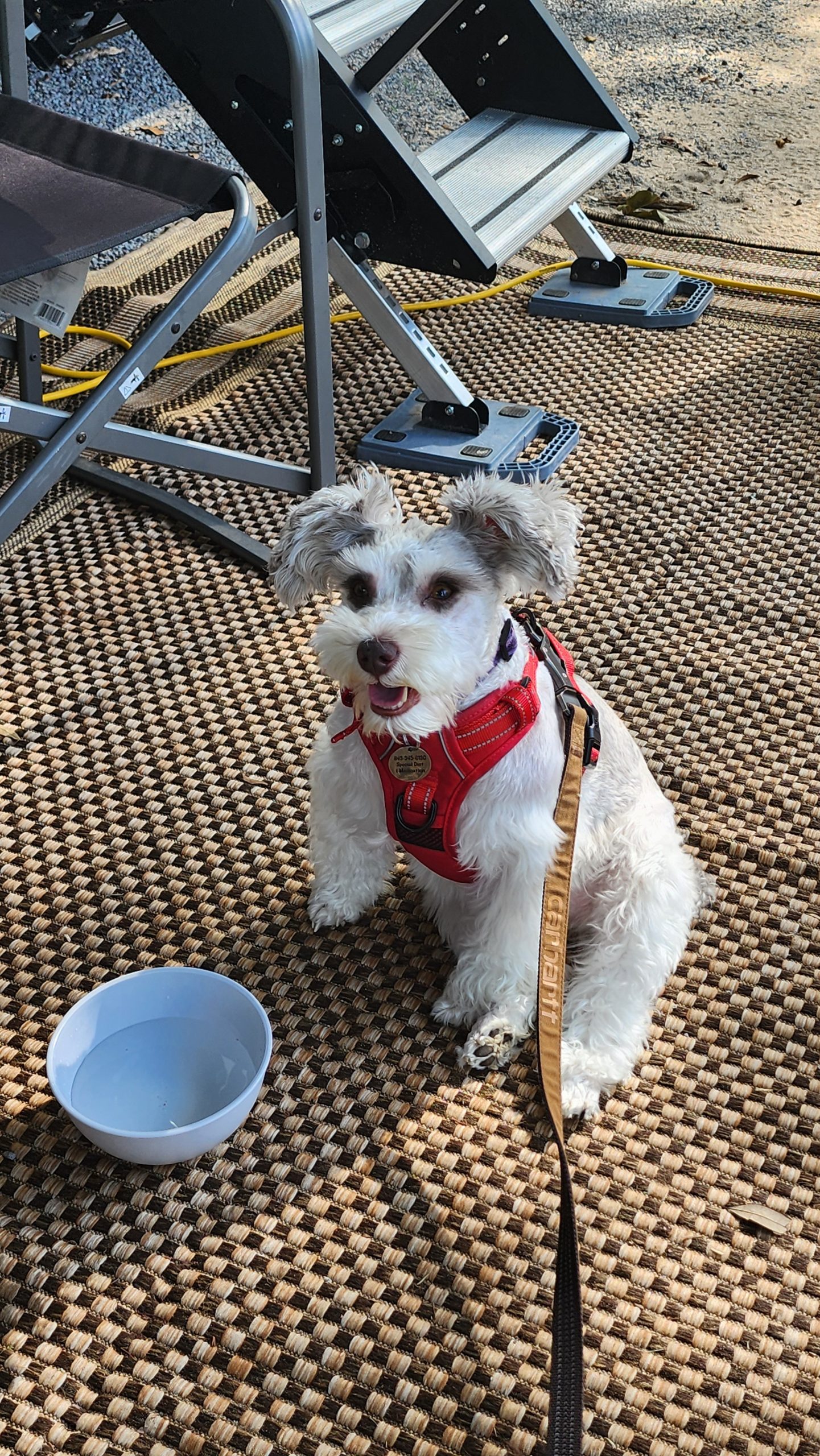
When we bought our travel trailer, we thought we had everything we needed to start camping.
We had the camper, our tow vehicle, basic camping supplies, and our Miniature Schnauzer, Angel, ready for new adventures. What we did not have was the experience to know which pieces of equipment would make the biggest difference.
Repeated trips taught us that the best travel trailer essentials are not necessarily the most exciting purchases. Some help protect the camper. Others make campsite setup easier, keep our equipment organized, or prevent small inconveniences from becoming larger problems.
We also learned that owning useful equipment is only part of the solution. Every item needs a designated storage location, and important safety equipment needs to be included in a consistent arrival and departure routine.
These are 15 travel trailer essentials that have made camping easier, safer, and more comfortable for our family.
Disclosures
Affiliate Disclosure: This post may contain affiliate links. If you make a purchase, complete a booking or rental, create a qualifying listing, subscribe to a service, or take another qualifying action through one of these links, we may earn a commission at no additional cost to you.
As an Amazon Associate I earn from qualifying purchases.
Advertising Disclosure: This website may display advertisements provided by third-party advertising partners, including Google AdSense. Advertising helps support Travelers and a Schnauzer and allows us to continue providing free travel resources, destination guides, and planning tips for our readers.
Product Recommendation Notice: Products recommended throughout this article are selected because we believe they may be helpful for families traveling with their dogs. Recommendations are based on our experiences where applicable, general travel knowledge, product research, and suitability for the topic. Readers should evaluate products to determine what best meets their individual needs.
Why the Right Travel Trailer Essentials Matter
A successful camping trip does not require filling every cabinet with expensive equipment.
For us, the goal is to carry gear that solves a specific problem or supports the way our family actually camps.
The right equipment can help us:
- Set up the travel trailer more efficiently
- Protect important RV systems
- Keep supplies organized
- Reduce stress on arrival and departure days
- Create a comfortable outdoor living space
- Keep Angel’s supplies together
- Prepare for minor problems on the road
We prefer full-hookup campsites whenever they are available, so our regular setup includes electrical, water, and sewer equipment. We also camp with a larger travel trailer, which makes leveling, site positioning, slide clearance, and organized storage especially important.
Our Complete Travel Trailer Setup Checklist explains the routine we follow after arriving at a campsite.
1. Heavy-Duty Rubber Wheel Chocks
Wheel chocks are one of the first pieces of equipment we use after positioning our travel trailer.
We place them securely against the tires before unhitching. They help prevent unwanted trailer movement while we work through the remaining setup steps.
We have tried several types of wheel chocks over the years, and some did not hold up well. Our heavy-duty rubber wheel chocks (paid link) have lasted more than six years and remain part of every campsite setup.
After pulling out of a site, we also check the empty campsite for wheel chocks and other equipment. Items sitting close to the tires can be surprisingly easy to overlook.
2. RV Leveling Blocks
Not every campground provides a perfectly level campsite.
We level our travel trailer from side to side before unhitching, using RV leveling blocks (paid link) underneath the low-side tires when needed.
Leveling the trailer helps create a more comfortable living space. Doors behave more predictably, sleeping areas feel better, and water drains more effectively.
We also learned an important departure lesson involving leveling blocks: we have accidentally left some behind.
Now, after pulling completely out of a campsite, we stop and look at the empty site again. That second check makes blocks and other forgotten items much easier to see.
Our Campground Departure Routine includes the final checks we complete before leaving.
3. RV Surge Protector
An RV surge protector is one of the most important pieces of electrical equipment we bring.
Campground electrical conditions can vary, and repairing damaged RV electrical components or appliances can be expensive.
Before connecting our trailer, we inspect the campground pedestal for visible damage. We turn the breaker off, connect the surge protector and power cord, and then turn the breaker back on.
Over the course of owning two travel trailers, we have tried different surge protectors and electrical management systems. The 50-amp RV surge protector we currently recommend (paid link) has worked better for our needs than the other options we have purchased.
Always select equipment that matches your RV’s electrical system and follow the RV, campground, and product manufacturers’ instructions.
4. Adjustable Water-Pressure Regulator
Water pressure can vary considerably between campgrounds.
We use an adjustable RV water-pressure regulator (paid link) whenever we connect our travel trailer to campground water.
The regulator allows us to monitor and manage the pressure entering the trailer instead of connecting directly to an unfamiliar water source.
After connecting the water equipment, we turn the water on slowly and inspect the connection points for leaks. This is also one of the systems we test before completely disconnecting our tow vehicle from the trailer.
5. Drinking-Water-Safe RV Hose
We keep a drinking-water-safe RV hose (paid link) exclusively for our freshwater connection.
Keeping the freshwater hose separate from sewer-related equipment is an important part of our storage system. Each type of equipment has its own designated location so we do not accidentally mix supplies.
After making the campground water connection, we inspect the hose, regulator, filter, and connection points before considering the setup complete.
We also drain and return the hose to its normal storage location when packing the trailer for departure.
6. RV Sewer Kit and Hose Support
We prefer full hookups, so sewer equipment is a normal part of our camping setup.
A complete RV sewer kit (paid link) keeps the main pieces together, while a sewer-hose support can help maintain a more consistent slope between the trailer and the campground connection.
Campground requirements vary, so we always check the individual campground’s rules before arriving.
We store our sewer equipment separately from our freshwater supplies. When leaving, we disconnect and store the sewer equipment before moving to the water and electrical connections.
Our experience with partial hookups also showed us why we prefer full hookups. Conserving freshwater, monitoring the holding tanks, and finding time to dump afterward added extra work to the weekend.
We share more about that experience in Full Hookup vs. Dry Camping: What Works Best for Our Family.
7. Jump Starter With an Air Compressor
Our jump starter with an air compressor is one of the most versatile pieces of vehicle emergency equipment we own.
We can use the compressor for:
- Travel trailer tires
- Tow-vehicle tires
- Bicycle tires
- Inflatable camping equipment
We once left our jump starter with air compressor (paid link) at home.
Nothing went wrong during that trip, but the mistake exposed a problem in our packing system. Owning emergency equipment does not help if it is sitting at home when we need it.
Now this item receives a separate check before we leave. We also follow the tire and vehicle manufacturers’ recommended pressure and operating instructions.
8. Tire-Pressure Monitoring System
A tire-pressure monitoring system can provide pressure and temperature information while an RV is being towed.
Early awareness of a change may give a driver an opportunity to stop and investigate before the situation becomes a larger roadside problem.
A monitoring system does not replace regular inspections. Tires still need to be checked for proper inflation, damage, age, wear, and other concerns before travel.
Anyone adding a TPMS should select one designed for the number of tires, pressure range, and towing setup involved.
9. Folding Outdoor Table
Extra outdoor workspace has been much more useful than we originally expected.
A folding table can provide space for:
- Food preparation
- Grilling supplies
- A campsite coffee station
- Outdoor meals
- Dog supplies
- Equipment that needs to stay off the ground
The picnic table included with a campsite is not always located where we want it. Sometimes it is too close to the fire ring, too far from the camper, or difficult to move.
Having our own folding table gives us more control over how we arrange the outdoor area.
10. Outdoor Camping Mat
Camping with Angel means dirt, leaves, pine needles, and grass eventually find their way into the travel trailer.
An outdoor camping mat helps create a defined living area beside the camper and reduces some of what gets tracked inside.
We still keep towels near the entrance for Angel’s paws, especially after rain or morning walks through wet grass. However, the mat gives us a useful first layer between the campsite surface and the trailer entrance.
We also inspect the placement before opening the awning or extending equipment around the campsite.
11. Portable Griddle
Cooking outdoors is one of our favorite parts of camping.
A portable griddle provides extra cooking space and allows us to prepare meals without adding as much heat or cooking odor inside the trailer.
We especially enjoy using a griddle for campsite breakfasts. It can handle several parts of the meal on one cooking surface, which makes preparation and cleanup easier.
Before purchasing any outdoor cooking equipment, consider where it will be stored, how it will be transported, and whether the campground has rules affecting outdoor cooking.
12. Collapsible Storage Containers
Storage space is limited in a travel trailer, and camping gear can accumulate quickly.
We use soft-sided storage baskets (paid link) in different areas of our trailer because they can adjust to fit cabinets of different sizes.
Our baskets help organize:
- Kitchen supplies
- Snacks
- Electronics
- Cleaning products
- Bathroom supplies
- Angel’s camping gear
The baskets themselves are useful, but the larger benefit comes from giving every category a designated location.
When an item always returns to the same place, we can find it faster and recognize more easily when something is missing.
We explain our complete system in How We Keep Our Travel Trailer Organized During Every Trip.
13. Battery-Powered Lanterns
Battery-powered lanterns remain helpful even when we stay at a campground with full hookups.
We use portable lighting during:
- Evening walks with Angel
- Campfires
- Power interruptions
- Late-night trips outside
- Campsite setup after an unexpected delay
- Outdoor cooking and cleanup
We also carry flashlights because a lantern and a flashlight serve different purposes. A lantern can illuminate a general area, while a flashlight makes it easier to direct light toward a specific connection, walking surface, or campsite feature.
Rechargeable lights should be charged before the trip and returned to their designated storage location afterward.
14. Comfortable Camping Chairs
We originally concentrated on whether camping chairs folded easily and fit into our storage space.
After spending several evenings sitting outside, comfort became just as important.
A supportive chair makes a noticeable difference when we are relaxing under the awning, eating outside, or sitting near a campfire.
Before choosing chairs, we consider:
- Folded size
- Weight capacity
- Support and comfort
- Ease of carrying
- Available storage space
- How difficult the chair is to open and close
Storage measurements matter because the door and opening of an exterior compartment may be smaller than the space available inside it.
15. A Dedicated Dog Camping Bag
One of the most helpful systems we created was giving Angel her own dedicated camping storage.
Her supplies no longer get divided between kitchen bags, family luggage, and random camper cabinets. Keeping them together makes it easier to prepare for trips and find what she needs at the campground.
Angel’s camping supplies normally include:
- Food and treats
- Medications and allergy supplies
- Regular leash and backup leash
- Harness and backup harness
- Waste bags
- Identification
- Water
- Travel bowls
- Towels
- Grooming supplies
- Favorite toys
- Vaccination records
- Emergency information
A pet travel organizer bag (paid link) can help keep smaller supplies together.
We also bring a collapsible dog travel bowl (paid link) for campground walks and day trips. It takes up very little space and is easy to keep accessible.
For wet grass, dirt, and muddy paws, microfiber pet towels (paid link) stay near the camper entrance.
For a closer look at Angel’s camping supplies, see 15 Things We Always Pack for Camping With Our Schnauzer.
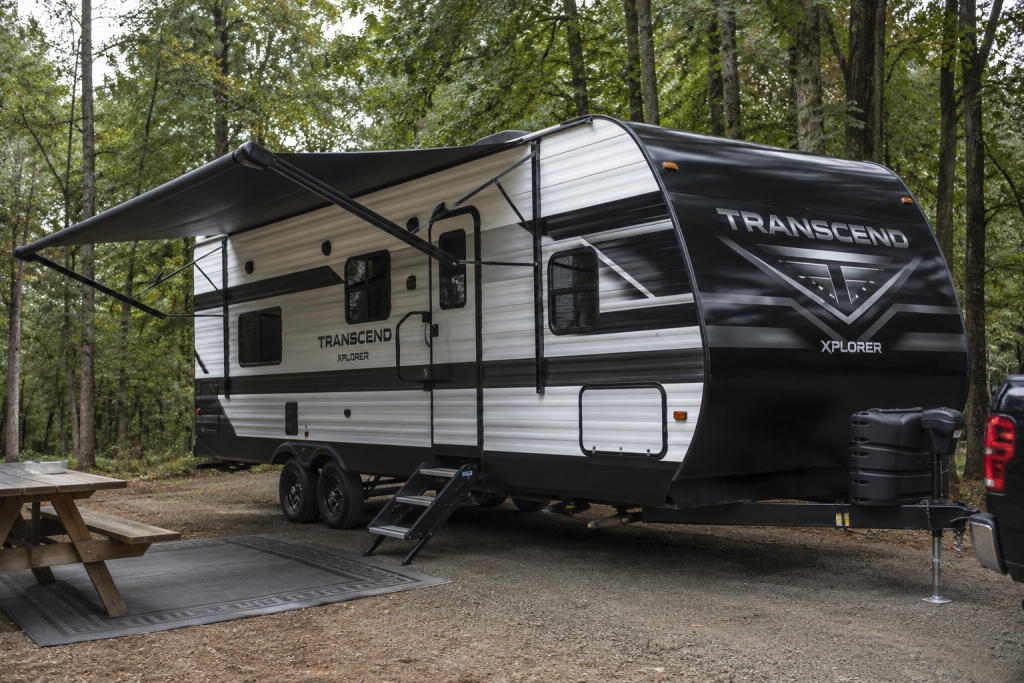
How We Organize Our Travel Trailer Essentials
Buying the right equipment did not automatically make camping easier.
The bigger improvement came when every category received its own storage location.
We keep water, electrical, sewer, leveling, outdoor, and dog supplies separated whenever possible. This helps us avoid searching through multiple compartments during setup.
It also supports our return-home routine.
After a trip, we:
- Clean equipment that needs attention.
- Wash towels and bedding.
- Restock consumable supplies.
- Recharge batteries and electronics.
- Return everything to its designated location.
- Note anything that needs repair or replacement.
Completing those tasks after a trip means less work is waiting for us before the next one.
What New Travel-Trailer Owners Should Purchase First
Every family camps differently, but we recommend handling safety and utility needs before buying convenience upgrades.
A practical starting group includes:
- Properly sized wheel chocks
- Leveling equipment
- An electrical protection system matched to the RV
- A drinking-water-safe hose
- A water-pressure regulator
- Appropriate sewer equipment
- Tire-care and emergency equipment
After those needs are addressed, outdoor mats, tables, storage baskets, cooking equipment, lanterns, and upgraded chairs can be added gradually.
It is also important to understand the trailer before purchasing a large amount of gear. Measure storage openings, know the electrical service, review tire requirements, and think about the types of campsites your family normally books.
Travel-Trailer Essentials for Camping With a Dog
Camping with Angel adds another category of equipment, but it also adds some of our favorite moments to each trip.
We keep her normal routine as consistent as possible and bring familiar supplies from home.
During warmer weather, we prioritize:
- Fresh drinking water
- Shade
- Shorter walks
- Cooler times of the day
- Paw checks
- Time inside the climate-controlled trailer
When campground rules allow us to secure Angel at the campsite, we supervise her at all times. We never leave her unattended on a tie-out, and we check each campground’s leash rules before using one.
Our Camping With a Miniature Schnauzer: Lessons We’ve Learned article shares more of what traveling with Angel has taught us.
Frequently Asked Questions
What are the most important travel trailer essentials for beginners?
We recommend starting with properly sized wheel chocks, leveling equipment, an RV electrical protection system, a water-pressure regulator, a drinking-water-safe hose, suitable sewer equipment, and tire-care supplies.
The exact equipment will depend on the travel trailer and the types of campsites being used.
Do I need a surge protector for my travel trailer?
An electrical protection system can help protect an RV from certain campground electrical problems. Select equipment that matches the trailer’s electrical service and follow the product, campground, and RV manufacturers’ instructions.
Are leveling blocks necessary?
Many campsites are not completely level, so leveling blocks can be useful. We use them underneath the low-side tires before unhitching when our trailer needs side-to-side adjustment.
What should I keep in a dog camping bag?
Our dog camping supplies include food, medications, allergy supplies, a leash and backup leash, a harness and backup harness, waste bags, identification, water bowls, towels, grooming supplies, toys, vaccination records, and emergency information.
What RV accessories make campsite setup easier?
For us, leveling blocks, wheel chocks, a water-pressure regulator, organized water and sewer equipment, outdoor lighting, and clearly designated storage locations make setup easier.
Should every travel trailer owner buy the same equipment?
No. Equipment should match the specific trailer, tow vehicle, campsite, storage space, family, and camping style involved.
Our family prefers full-hookup campsites, so utility-connection equipment receives more attention in our setup than it might for someone who primarily boondocks or camps without hookups.
How do we keep from forgetting equipment?
We give important supplies designated storage locations and follow repeatable arrival and departure routines.
We also check the empty campsite after pulling out because we have previously forgotten leveling blocks.
Final Thoughts
The travel trailer essentials that have helped us most are the items that solve a real problem.
Wheel chocks and leveling blocks support our campsite setup. Electrical and water equipment help us connect the trailer more confidently. Storage baskets make supplies easier to find. Outdoor gear makes the campsite more comfortable, and Angel’s dedicated bag keeps her necessities together.
We did not purchase everything at once.
Our camping setup improved a little at a time as we learned what worked, what we repeatedly used, and what we wished we had during previous trips.
That experience also taught us that more gear does not automatically create a better camping trip. The most useful equipment earns its storage space and has a specific role in the way our family travels.
For additional planning help, see our Camping Checklist for Families With Dogs and How We Choose the Best Campsite at a Campground.
Important Notices
Travel Information Disclaimer: Travel information is provided for general planning purposes only. Regulations, policies, pet requirements, availability, admission fees, weather conditions, and operating hours may change. We recommend confirming current information directly with the applicable business, attraction, campground, airline, or government agency before traveling.
Accuracy Notice: We make every effort to provide accurate and up-to-date information. However, travel policies, operating hours, pet rules, reservation procedures, pricing, and other details may change without notice. Always verify important information directly with the official provider before making travel plans.
RV & Camping Disclaimer: Safe RV operation and campground use require proper planning, equipment maintenance, and adherence to manufacturer recommendations and campground regulations. Always follow applicable safety procedures and consult qualified professionals whenever necessary.
Safety Disclaimer: Every travel situation is unique. Always exercise good judgment, follow posted rules, comply with local laws, monitor weather conditions, and prioritize the safety of yourself, your family, and your pets. Travelers and a Schnauzer is not responsible for decisions made based on the information contained in this article.
Leave a Reply