Tag: campground etiquette

  • Dog-Friendly Campground Etiquette: Tips Every Pet Owner Should Know

    Dog-Friendly Campground Etiquette: Tips Every Pet Owner Should Know

    Introduction

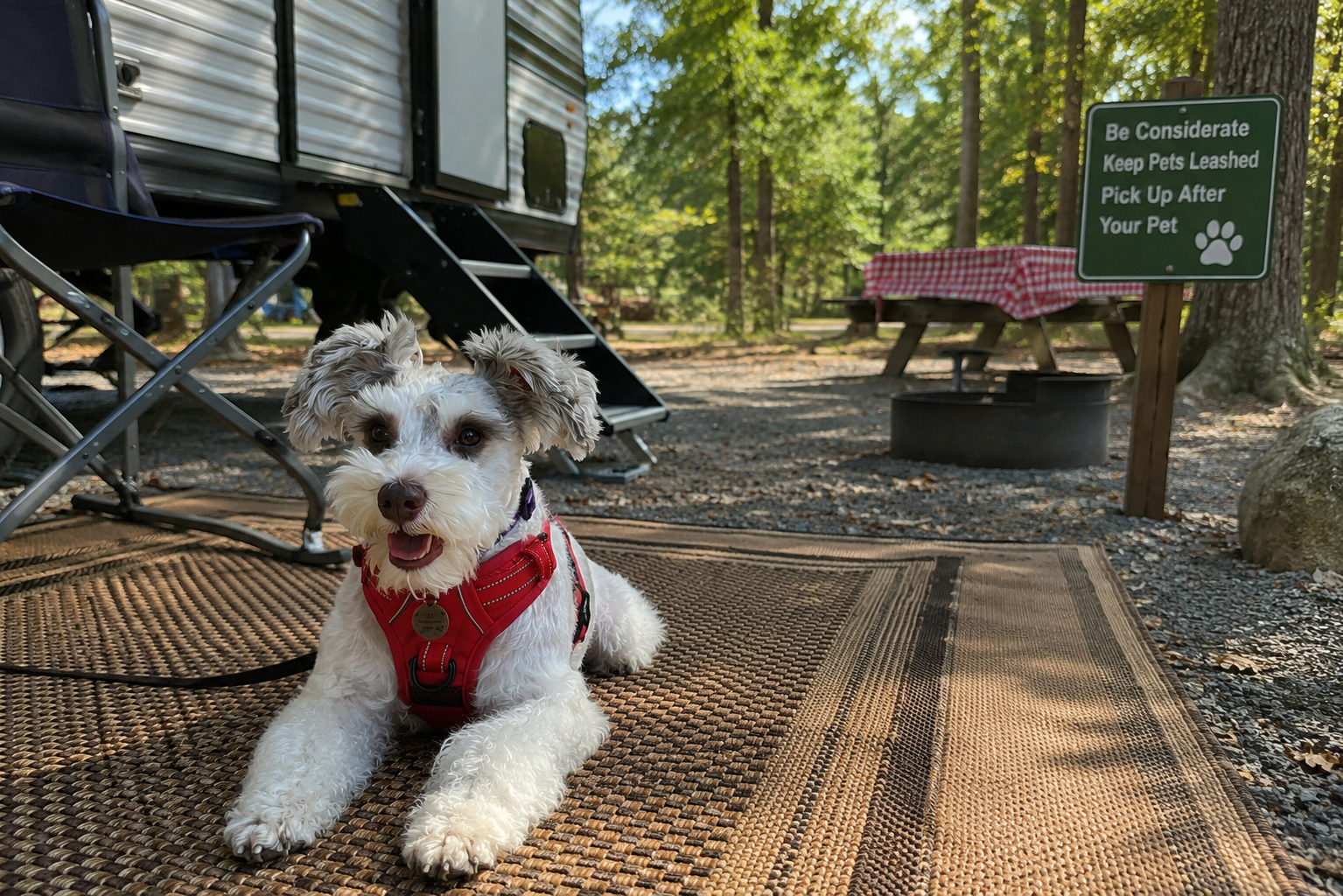
    Camping is one of our favorite ways to spend time together as a family. Whether we’re staying in our travel trailer for a weekend getaway or planning a longer outdoor adventure, having our Miniature Schnauzer along makes the experience even more enjoyable.

    One thing we’ve learned while researching pet-friendly campgrounds and preparing for trips is that responsible pet ownership plays a huge role in keeping campgrounds welcoming to dogs. Most campers appreciate sharing the outdoors with four-legged companions, but a few simple etiquette mistakes can quickly create frustration for neighboring campers.

    Understanding basic dog-friendly campground etiquette helps everyone enjoy their stay. It also helps preserve access to pet-friendly campgrounds for future travelers.

    If you’re planning your next camping trip with your dog, here are some important campground etiquette tips worth keeping in mind.


    Why Campground Etiquette Matters for Dog Owners

    Many campgrounds work hard to accommodate pets by offering dog parks, walking trails, pet-friendly campsites, and waste stations.

    However, those amenities often depend on campers following the rules and being considerate of others.

    Good campground etiquette helps:

    • Create a pleasant experience for everyone
    • Protect campground wildlife
    • Reduce conflicts between campers
    • Keep pets safe
    • Encourage campgrounds to remain dog-friendly

    As dog owners, we all play a role in maintaining a positive camping environment.


    Follow Campground Pet Rules

    Review Pet Policies Before Arrival

    Every campground has its own pet policies.

    Before making reservations, we recommend checking:

    • Number of pets allowed
    • Breed or size restrictions
    • Pet fees
    • Designated pet areas
    • Quiet hour requirements
    • Vaccination requirements

    Some campgrounds are extremely dog-friendly, while others have more restrictions.

    When planning a trip, reviewing these details ahead of time can help avoid unexpected surprises after arrival.

    Understand Leash Requirements

    One of the most common campground rules is keeping dogs on a leash.

    Even if your dog is well-trained and friendly, leash rules exist for several important reasons:

    • Protecting wildlife
    • Preventing encounters with unfamiliar dogs
    • Respecting campers who may be uncomfortable around pets
    • Keeping pets away from roads and campground traffic

    A sturdy leash and comfortable harness can make campground walks easier and safer.


    Respect Fellow Campers

    Keep Barking Under Control

    Dogs naturally bark from time to time, especially when they encounter new sounds and surroundings.

    Campgrounds often introduce unfamiliar experiences such as:

    • Passing bicycles
    • Golf carts
    • Wildlife
    • Children playing
    • Other dogs

    Excessive barking, however, can disturb neighboring campsites.

    To help reduce barking:

    • Exercise your dog regularly
    • Provide mental stimulation
    • Bring familiar toys from home
    • Follow campground quiet hours

    We always pack a few favorite toys when traveling to help keep our schnauzer occupied and comfortable.

    Don’t Allow Dogs to Wander Through Other Campsites

    Campgrounds may feel relaxed and open, but each campsite is still someone’s temporary home.

    Even friendly dogs should not:

    • Walk through neighboring campsites
    • Sniff food or belongings
    • Jump on other campers
    • Approach children without permission

    Some campers may have allergies, fears, or pets that do not enjoy unexpected interactions.

    A little consideration goes a long way.


    Keep Campgrounds Clean

    Pick Up After Your Dog Immediately

    Cleaning up after your dog is one of the simplest and most important campground responsibilities.

    Nobody wants to discover pet waste while walking to the bathhouse, playground, or campground trail.

    We always keep waste bags easily accessible whenever we’re outside.

    A waste bag dispenser attached to the leash can make cleanup more convenient.

    Dispose of Waste Properly

    After cleaning up, make sure waste is placed in designated trash containers.

    Leaving bags on trails, beside campsites, or near campground roads creates unpleasant conditions for everyone.

    Many campgrounds provide dedicated pet waste stations, but it’s always a good idea to bring extra supplies.


    Prioritize Your Dog’s Safety

    Never Leave Your Dog Unattended

    Many campgrounds prohibit leaving pets unattended at campsites.

    Even calm dogs can become stressed in unfamiliar surroundings.

    Potential issues include:

    • Excessive barking
    • Escaping from the campsite
    • Exposure to heat
    • Encounters with wildlife
    • Anxiety from unfamiliar noises

    When planning activities, we always recommend looking for dog-friendly attractions so your pet can join the adventure whenever possible.

    Be Aware of Wildlife and Weather

    Campgrounds are often located in natural areas where wildlife is active.

    Depending on your destination, you may encounter:

    • Deer
    • Raccoons
    • Snakes
    • Coyotes
    • Bears

    Keeping your dog leashed and supervised helps protect both your pet and local wildlife.

    Weather is another important consideration.

    During warmer months, provide:

    • Plenty of fresh water
    • Shade
    • Cooling breaks

    A portable dog water bottle is something many traveling pet owners find helpful during campground walks.


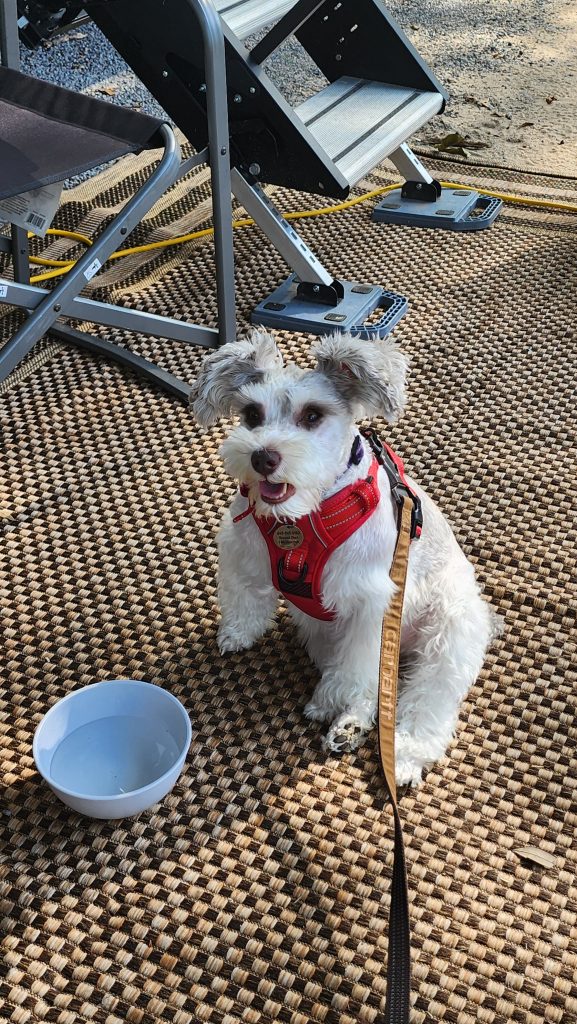
    Create a Comfortable Campsite for Your Dog

    Just like people, dogs appreciate having a comfortable place to relax after a day outdoors.

    Consider bringing:

    Having familiar items available can help reduce anxiety and make camping more enjoyable.

    Family Travel Tips for Camping with Dogs

    Camping with children and dogs requires a little extra planning.

    Families may benefit from:

    • Establishing designated dog walking times
    • Assigning pet-care responsibilities
    • Packing extra towels for muddy paws
    • Bringing additional drinking water
    • Planning pet-friendly activities

    Many families find that involving children in pet care helps teach responsibility while making camping more enjoyable.


    Dog-Friendly Travel Tips

    Before leaving home, make sure your dog has:

    • Updated ID tags
    • Current vaccinations
    • Microchip information
    • Any necessary medications

    We also recommend researching nearby veterinary clinics before arriving at your destination.

    Knowing where emergency care is available can provide peace of mind during your trip.

    Policies, fees, operating hours, and pet rules can change. We recommend confirming current information directly with the campground before your visit.


    Final Thoughts

    Camping with a dog can be one of the most rewarding ways to enjoy the outdoors as a family. Following basic campground etiquette helps create a positive experience for everyone while ensuring campgrounds remain welcoming to pets.

    By respecting campground rules, cleaning up after your dog, keeping pets supervised, and being considerate of fellow campers, you’ll help create a better camping experience for both people and pets.

    Whether you’re heading to a mountain campground, lakeside RV resort, or a quiet wooded campsite, a little preparation and courtesy can make the trip more enjoyable for everyone involved.

    Frequently Asked Questions

    Are dogs allowed at most campgrounds?

    Many campgrounds allow dogs, but policies vary. Always check campground rules before making reservations.

    Should my dog remain on a leash at the campground?

    In most campgrounds, yes. Leash requirements help protect pets, wildlife, and fellow campers.

    Can I leave my dog at the campsite while I explore?

    Many campgrounds prohibit unattended pets. Check campground policies before leaving your dog alone. We never leave our miniature schnauzer alone outside at our campsite.

    What should I bring when camping with a dog?

    Helpful items include food, water, bowls, waste bags, medications, bedding, leashes, and identification tags.

    How can I keep my dog comfortable while camping?

    Bring familiar bedding, toys, fresh water, shade, and allow time for exercise and relaxation.

    What should I do if my dog barks frequently at the campground?

    Provide exercise, supervision, and mental stimulation. Bringing familiar toys and maintaining routines can also help reduce barking.

    You May also Like

    15 Things We Always Pack for Camping With Our Schnauzer
    Camping With a Miniature Schnauzer: Lessons We’ve Learned
    Complete Travel Trailer Setup Checklist: Our Step-by-Step Routine for Stress-Free Camping

    Affiliate Disclosure

    This post may contain affiliate links. If you make a purchase through these links, we may earn a small commission at no additional cost to you. We only recommend products, services, and destinations that we genuinely believe may be helpful to our readers.

    Advertising Disclosure

    Travelers and a Schnauzer participates in advertising programs, including Google AdSense. Advertisements displayed on this site help support our content and allow us to continue sharing travel tips, destination guides, camping adventures, vacation rental experiences, and travels with our miniature schnauzer.
  • How We Keep Our Schnauzer Safe at Campgrounds

    How We Keep Our Schnauzer Safe at Campgrounds

    Introduction

    Camping is one of our favorite ways to travel as a family. Whether we’re spending a weekend in our travel trailer, exploring a mountain campground, or enjoying a longer road trip, our Miniature Schnauzer is always part of the adventure.

    While campgrounds can be wonderful places for dogs, they also present challenges that many pet owners may not encounter at home. Unfamiliar surroundings, wildlife, other campers, changing weather conditions, and campground traffic can all create situations that require extra attention.

    Over the years, we’ve developed a routine that helps us keep our Schnauzer safe while still allowing her to enjoy everything that makes camping fun. These are the practices we follow at every campground we visit.

    Why Campground Safety Matters

    One of the reasons we love camping is that it allows us to spend more time outdoors together. That also means our Schnauzer is exposed to more sights, smells, sounds, and distractions than she experiences at home.

    A campground can include:

    • Vehicles and golf carts
    • Wildlife activity
    • Campfires
    • Unfamiliar dogs
    • Hiking trails
    • Bodies of water
    • Crowded weekends and holiday events

    Taking a few extra precautions helps us relax and enjoy our trip knowing we’ve planned ahead.

    Setting Up a Safe Campsite

    We Create a Comfortable Home Base

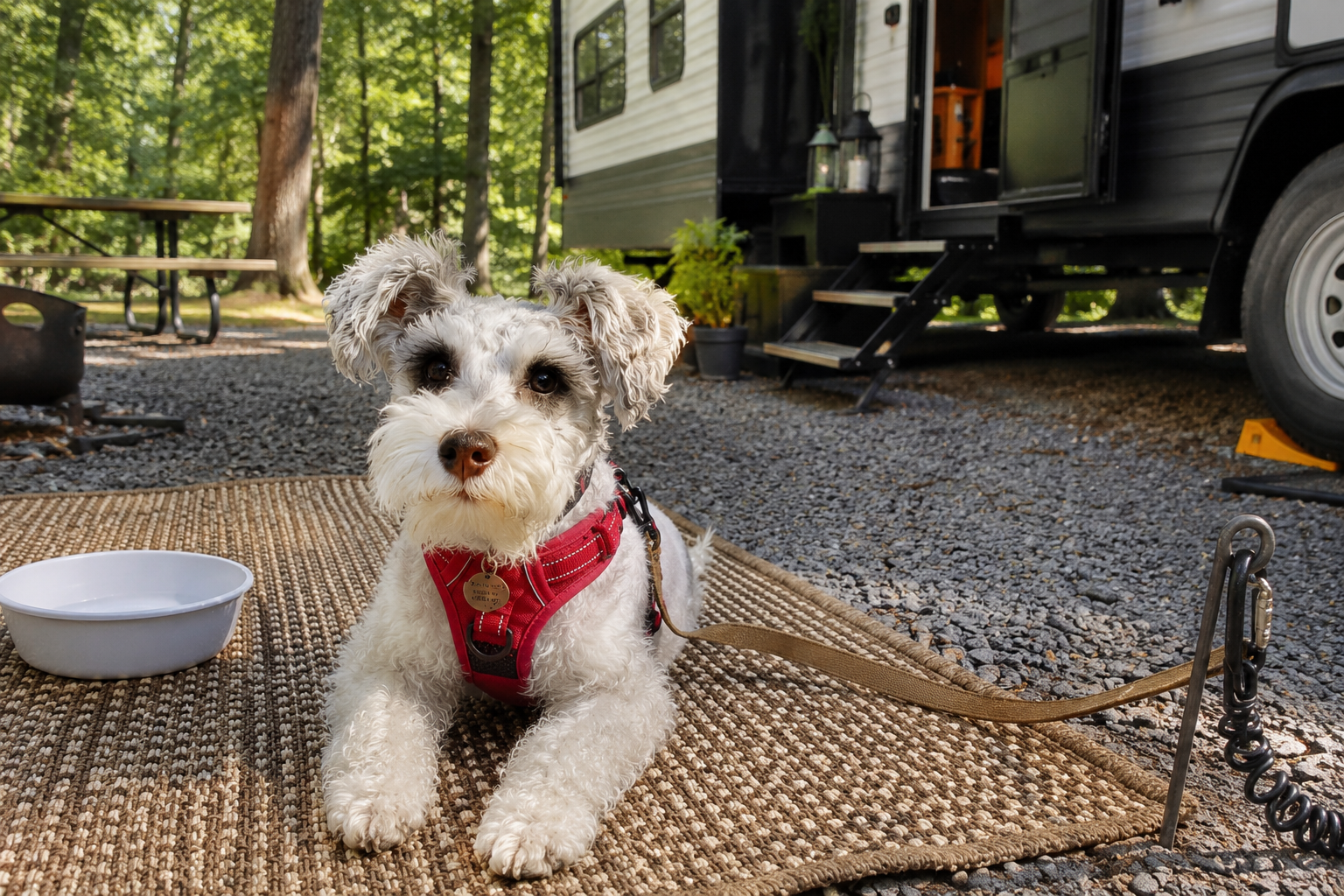
    After arriving at a campground, one of the first things we do is set up an area specifically for our Schnauzer.

    We make sure she has:

    • Fresh water available at all times
    • A comfortable place to rest
    • Shade during warmer weather
    • Easy access to the travel trailer
    • Familiar items from home

    Having a consistent setup helps her settle into a new environment more quickly.

    Her dog bed and favorite blanket often help make an unfamiliar campsite feel more familiar.

    We Use a Crate When Appropriate

    Our Schnauzer is crate trained, and we bring her crate on many camping trips.

    The crate provides:

    • A familiar resting area
    • A secure place to relax
    • A safe option when needed inside the camper

    Because she associates her crate with comfort rather than punishment, it gives her a quiet place to retreat when campground activity becomes overwhelming.

    We Keep Her Leashed

    Campground Rules Matter

    Most campgrounds require dogs to remain leashed, and we always follow those rules.

    Even well-behaved dogs can become distracted by:

    • Squirrels
    • Deer
    • Birds
    • Other dogs
    • Interesting smells

    A secure harness and leash help keep her close while allowing her to enjoy exploring.

    Retractable Leashes Are Not Always Ideal

    In crowded campgrounds, we generally prefer a standard leash because it gives us more control around roads, campsites, and other campers.

    Keeping her nearby helps prevent unwanted encounters and reduces stress for everyone.

    Staying Aware of Wildlife

    Wildlife Encounters Can Happen Anywhere

    Many campgrounds are located near forests, mountains, lakes, and rivers.

    Depending on where we’re camping, wildlife may include:

    • Deer
    • Raccoons
    • Skunks
    • Snakes
    • Coyotes
    • Bears

    Our Schnauzer is naturally curious, so we pay close attention during walks, especially early in the morning and near dusk.

    Food Storage Matters

    Leaving food outside can attract unwanted visitors.

    We store:

    • Dog food
    • Treats
    • Human food
    • Trash

    in secure containers whenever possible.

    Proper food storage protects both wildlife and campers.

    Protecting Her From Heat

    Summer Camping Requires Extra Attention

    Warmer temperatures can affect dogs quickly.

    When camping during the summer, we try to:

    • Take shorter walks during peak heat
    • Provide plenty of water
    • Spend time inside the air-conditioned camper
    • Seek shaded areas whenever possible

    A portable dog water bottle is something we bring on nearly every campground walk.

    Watch the Ground Temperature

    Pavement, gravel, and even campground roads can become surprisingly hot.

    Before longer walks, we always check the surface temperature to help protect her paws.

    Campfire Safety

    Campfires are part of the camping experience, but they require supervision when dogs are nearby.

    We keep our Schnauzer a safe distance away from:

    • Open flames
    • Cooking equipment
    • Hot grills
    • Fire rings

    After a fire is extinguished, hot coals may remain for hours. We continue monitoring the area even after the fire appears out.

    Checking the Campsite for Hazards

    Before settling in, we like to walk around the campsite and identify potential hazards.

    Things we watch for include:

    • Broken glass
    • Fishing hooks
    • Sharp sticks
    • Firewood debris
    • Toxic plants
    • Trash left behind by previous campers

    A quick inspection only takes a few minutes and can help prevent injuries later.

    Keeping Identification Updated

    Before every trip, we verify that our Schnauzer’s identification tags are current.

    Her collar includes:

    • Name
    • Phone number
    • Contact information

    We also keep recent photos on our phones.

    If a dog ever becomes separated from its family, having current identification can make reunification much easier.

    Being Prepared for Emergencies

    Carry a Pet First Aid Kit

    We never leave for a camping trip without basic emergency supplies.

    Our kit includes:

    • Gauze
    • Bandages
    • Tweezers
    • Tick remover
    • Antiseptic wipes
    • Emergency contact information
    • Veterinary records

    A pet first aid kit is worth considering for any family that regularly travels with pets.

    Know Where the Closest Veterinarian Is Located

    Before arriving at a campground, we usually identify nearby veterinary clinics and emergency animal hospitals.

    Fortunately, we’ve never needed emergency care while camping, but having a plan helps us feel more prepared.

    Family Travel Tips

    When camping with children and dogs, communication helps everything run smoothly.

    We make sure everyone understands:

    • Campground rules
    • Leash expectations
    • Wildlife safety
    • Water safety
    • Campfire boundaries

    Having clear expectations helps create a safer environment for everyone.

    Dog-Friendly Travel Tips

    A few items we rarely camp without include:

    These items have become part of our regular camping setup and help make travel easier with our Schnauzer.

    Final Thoughts

    Camping has given our family countless opportunities to explore new places and spend quality time together outdoors. Having our Miniature Schnauzer along for those adventures makes every trip even more memorable.

    While no campground is completely risk-free, a little preparation goes a long way. By staying aware of our surroundings, following campground rules, monitoring weather conditions, and planning ahead, we can focus on enjoying our trip instead of worrying about preventable problems.

    Whether we’re camping in the mountains, beside a lake, or at one of our favorite RV destinations, keeping our Schnauzer safe remains one of our top priorities.

    Frequently Asked Questions

    What is the biggest safety concern for dogs at campgrounds?

    Common concerns include heat, wildlife encounters, traffic, unfamiliar dogs, and campfire hazards.

    Should dogs stay on a leash at campgrounds?

    Yes. Most campgrounds require leashes, and keeping dogs leashed helps protect both pets and other campers.

    What should be included in a camping pet first aid kit?

    Basic supplies such as gauze, bandages, tweezers, antiseptic wipes, tick removal tools, and emergency contact information are helpful items to carry.

    Are campgrounds generally dog-friendly?

    Many campgrounds welcome dogs, but pet policies vary. Policies, fees, operating hours, and pet rules can change. We recommend confirming current information directly with the campground before your visit.

    You May also Like

    15 Things We Always Pack for Camping With Our Schnauzer
    Camping With a Miniature Schnauzer: Lessons We’ve Learned
    Complete Travel Trailer Setup Checklist: Our Step-by-Step Routine for Stress-Free Camping

    Affiliate Disclosure

    This post may contain affiliate links. If you make a purchase through these links, we may earn a small commission at no additional cost to you. We only recommend products, services, and destinations that we genuinely believe may be helpful to our readers.

    Advertising Disclosure

    Travelers and a Schnauzer participates in advertising programs, including Google AdSense. Advertisements displayed on this site help support our content and allow us to continue sharing travel tips, destination guides, camping adventures, vacation rental experiences, and travels with our Miniature Schnauzer.