Introduction
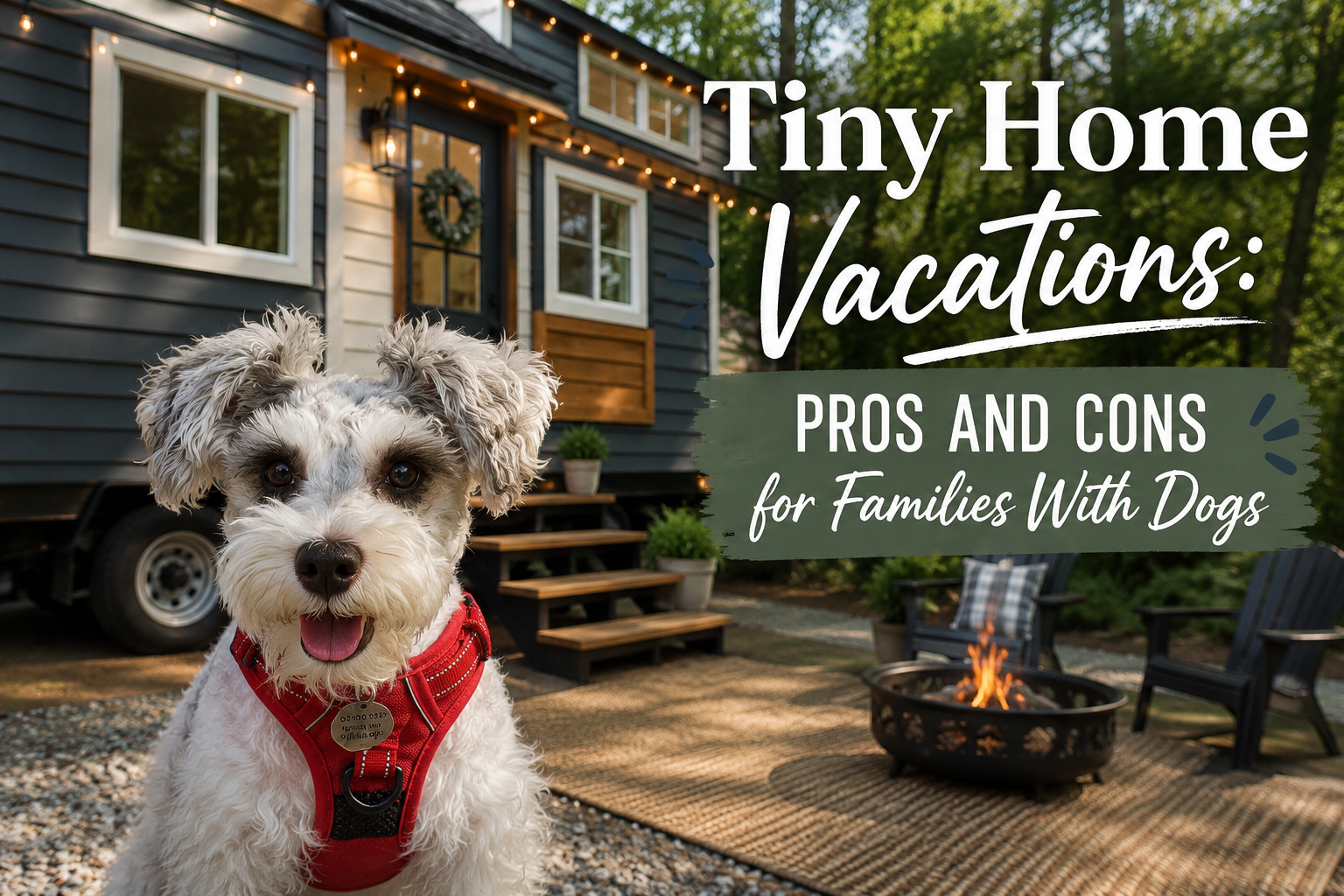
As a family that loves exploring new destinations with our female Miniature Schnauzer, we’re always interested in unique places to stay. While we often book vacation rentals and enjoy camping in our travel trailer, tiny homes have become increasingly popular among travelers looking for a different type of getaway.
Tiny homes offer a blend of simplicity, comfort, and adventure. They often provide many of the conveniences of a vacation rental while encouraging families to spend more time outdoors enjoying their destination.
If you’re considering a tiny home vacation with your dog, there are several factors worth thinking about before making a reservation. While tiny homes can be a wonderful fit for some families, they aren’t perfect for every travel style.
Here’s a closer look at the advantages and challenges families may encounter when planning a tiny home vacation with a dog.
What Is a Tiny Home Vacation?
Tiny homes are compact accommodations designed to maximize every square foot of living space. Many include:
- A small kitchen
- Full bathroom
- Sleeping loft or bedroom (sometimes both)
- Living area
- Outdoor seating space
Some tiny homes are located in dedicated tiny home communities, while others can be found at campgrounds, RV resorts, mountain destinations, lakeside properties, and vacation rental developments.
Many travelers choose tiny homes because they provide a more private and unique experience than a traditional hotel room.
Pros of Tiny Home Vacations for Families With Dogs
Cozy and Comfortable for Smaller Families
For families of three like ours, a tiny home can provide enough space without feeling overwhelming.
Many tiny homes are thoughtfully designed with creative storage solutions and efficient layouts that make the most of limited square footage.
Encourages More Outdoor Adventure
One thing we appreciate about smaller accommodations is that they naturally encourage outdoor activities.
Instead of spending most of the day indoors, families often find themselves:
- Exploring hiking trails
- Visiting nearby attractions
- Enjoying campfires
- Walking their dogs
- Relaxing on outdoor patios
For active dogs, additional outdoor time can be a major benefit.
Often Located in Scenic Areas
Many tiny home developments are found near:
- Mountains
- Lakes
- State parks
- National forests
- Campgrounds
Since our family often prefers mountain destinations and outdoor recreation, the locations of many tiny home communities can be especially appealing.
Easier to Maintain During Your Stay
Traveling with a dog usually means tracking in some dirt, leaves, and fur.
One advantage of a smaller space is that daily cleanup tends to be quick and manageable.
A few minutes of tidying each day can keep the entire space looking organized.
Can Be Budget-Friendly
Depending on the location and season, tiny homes may be less expensive than larger cabins or vacation rentals.
The savings may allow families to:
- Stay longer
- Visit more attractions
- Enjoy additional dining experiences
- Travel more frequently
Cons of Tiny Home Vacations for Families With Dogs
Limited Indoor Space
The most obvious challenge is the size.
Once you add:
- Suitcases
- Dog supplies
- Food
- Toys
- Outdoor gear
the available space can feel much smaller than it looked in photos.
Families with multiple children or larger dogs may find the space restrictive.
Rainy Weather Can Feel Crowded
Weather can have a significant impact on a tiny home vacation.
When outdoor activities are limited due to rain, everyone may spend more time inside.
This can make the compact space feel crowded, especially if your dog is energetic.
Storage Requires Planning
Tiny homes often provide less storage than traditional vacation rentals.
Before booking, it helps to think about where you’ll store:
- Dog food
- Leashes
- Hiking gear
- Shoes
- Luggage
- Coolers
Packing efficiently becomes even more important.
Loft Sleeping Areas May Not Work for Everyone
Many tiny homes use sleeping lofts to maximize living space.
Families traveling with young children, older adults, or dogs that cannot climb stairs may want to carefully review floor plans before booking.
Pet Policies Can Vary
Not every tiny home allows pets.
Some properties may have:
- Weight restrictions
- Breed restrictions
- Additional pet fees
- Limits on the number of pets allowed
Always review the property’s pet policy before making a reservation.
How We Prepare for Small-Space Travel
Whether we’re staying in a vacation rental or camping in our travel trailer, organization plays a major role in making a trip more enjoyable.
One of our favorite organization solutions is using storage baskets.
Baskets help keep items grouped together and easy to find, especially in smaller spaces.
Other helpful items families may want to consider include:
Keeping gear organized helps prevent a small space from feeling cluttered.
Family Travel Tips for Tiny Home Stays
Review Floor Plans Carefully
Photos can sometimes make accommodations appear larger than they are.
Look for:
- Sleeping arrangements
- Dining space
- Bathroom size
- Outdoor seating areas
Check Nearby Amenities
When planning a visit, it can be helpful to identify:
- Grocery stores
- Restaurants
- Gas stations
- Emergency services
before arriving.
Consider Seasonal Weather
A tiny home that feels spacious during mild weather may feel much smaller during several days of rain.
If traveling during colder months, having nearby indoor attractions can be helpful.
Dog-Friendly Travel Tips for Tiny Home Vacations
Bring Familiar Comfort Items
Dogs often adjust more quickly when familiar items are available.
Consider bringing:
- Favorite blanket
- Dog bed
- Toys
- Treats
Plan Daily Exercise
Because indoor space is limited, regular exercise becomes even more important.
Many dogs benefit from:
- Morning walks
- Hiking adventures
- Park visits
- Evening strolls
Research Veterinary Clinics Nearby
Before any trip, we recommend locating a nearby veterinarian in case an unexpected issue arises.
Having that information available can provide peace of mind.
Follow Community Rules
Many tiny home communities require:
- Dogs to remain leashed
- Waste cleanup
- Quiet hours
Following local rules helps ensure a positive experience for everyone.
Are Tiny Homes Right for Your Family?
Tiny home vacations can be a great fit for families who:
- Enjoy spending time outdoors
- Prefer unique accommodations
- Travel light
- Have smaller dogs
- Appreciate simple living
They may be less ideal for travelers who prefer large indoor living spaces or who anticipate spending most of their vacation indoors.
Like vacation rentals, cabins, and RV camping, tiny homes work best when they match your family’s travel style.
Final Thoughts
Tiny home vacations offer a unique way to experience a destination while keeping the focus on outdoor adventures, family time, and exploring new places.
For families traveling with dogs, they can provide a comfortable home base for hiking, sightseeing, and enjoying dog-friendly attractions.
While limited space and storage require a little extra planning, many travelers find the experience well worth it.
Before booking, carefully review floor plans, pet policies, and nearby amenities to make sure the property fits your family’s needs.
Policies, fees, operating hours, and pet rules can change. We recommend confirming current information directly with the destination, attraction, campground, or business before your visit.
You May also Like
Exploring the Blue Ridge Mountains With Our Schnauzer
Family Road Trip Packing Checklist: Everything We Bring for Stress-Free Travel
First-Time RV Camping Checklist: Everything You Need for a Stress-Free First Trip
Frequently Asked Questions
Are tiny homes good for dogs?
Many dogs do well in tiny homes, especially when they receive plenty of outdoor exercise and have familiar comfort items available.
Do most tiny homes allow pets?
Pet policies vary by property. Always verify pet fees, restrictions, and rules before booking.
How much space do families need in a tiny home?
That depends on family size, travel style, and the length of the stay. Families who spend most of their time outdoors often find tiny homes comfortable.
What should I bring for my dog during a tiny home vacation?
Food, medications, leash, harness, waste bags, bedding, toys, and water bowls are all helpful essentials.
Are tiny homes cheaper than vacation rentals?
In some destinations they can be, but prices vary depending on location, amenities, and season.
Are tiny homes suitable for rainy-weather vacations?
They can be, but families should understand that extended bad weather may make the small space feel more crowded.
Affiliate Disclosure
This post may contain affiliate links. If you make a purchase through these links, we may earn a small commission at no additional cost to you. We only recommend products, services, and destinations that we genuinely believe may be helpful to our readers.
Advertising Disclosure
Travelers and a Schnauzer participates in advertising programs, including Google AdSense. Advertisements displayed on this site help support our content and allow us to continue sharing travel tips, destination guides, camping adventures, vacation rental experiences, and travels with our miniature schnauzer.
Leave a Reply