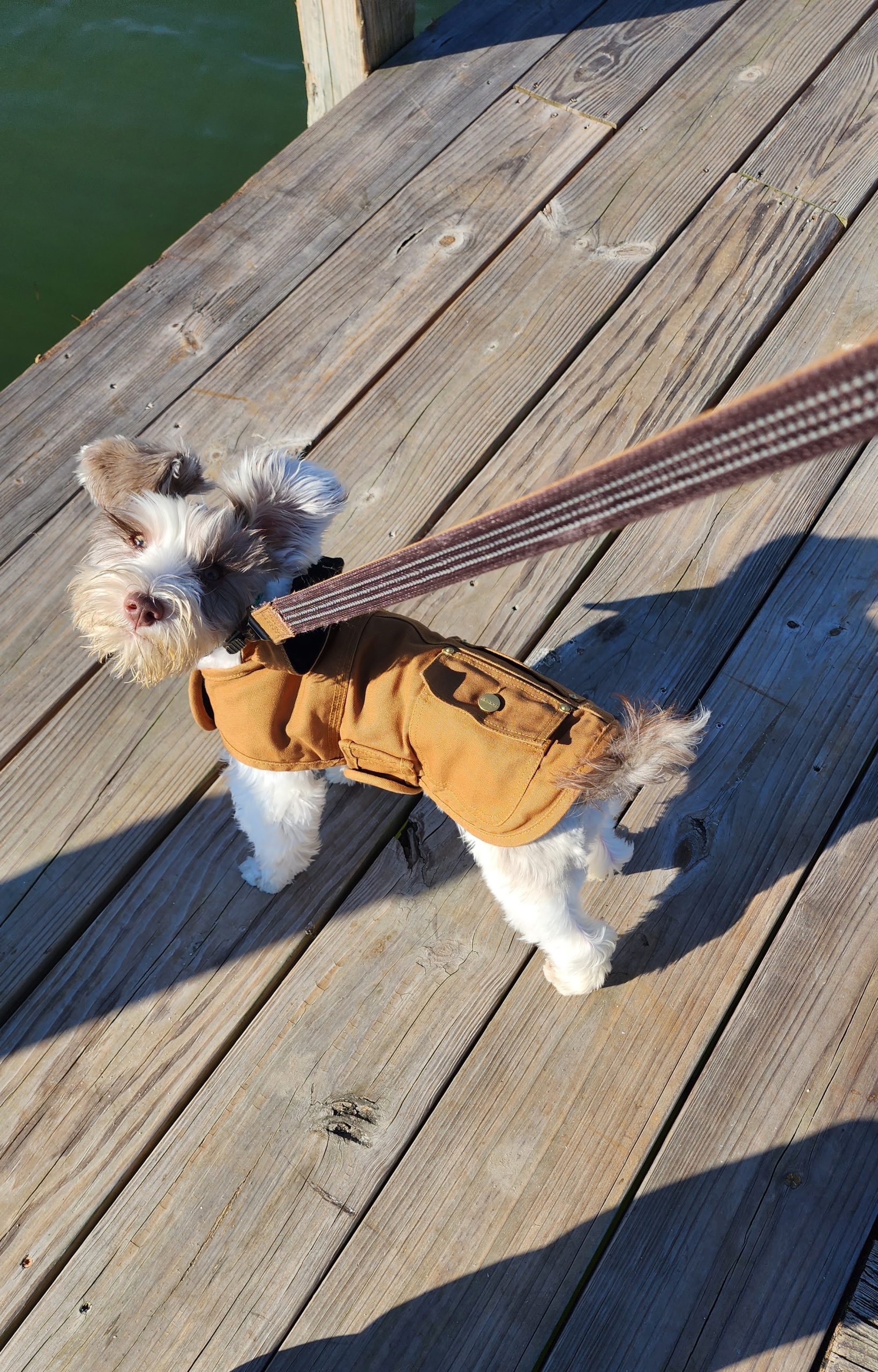
Traveling with our Miniature Schnauzer has taught us that small oversights can create some of the biggest travel problems. A forgotten leash, medication packed where we cannot reach it, an unclear pet policy, or an itinerary built around a place that does not allow dogs can quickly complicate a trip.
Affiliate Disclosure: This post may contain affiliate links. If you make a purchase, complete a booking or rental, create a qualifying listing, subscribe to a service, or take another qualifying action through one of these links, we may earn a commission at no additional cost to you.
As an Amazon Associate I earn from qualifying purchases.
Advertising Disclosure: This website may display advertisements provided by third-party advertising partners, including Google AdSense. Advertising helps support Travelers and a Schnauzer and allows us to continue providing free travel resources, destination guides, and planning tips for our readers.
Over time, we have become much more deliberate about how we travel with Angel. We research where she can go before building our itinerary, pack around her normal routine, keep essential supplies accessible during the drive, and leave room for plans to change.
We have also learned that successful dog travel is not about bringing every product we might possibly need. It is about checking the right details, remembering the items that would be difficult to replace, and planning for the dog who is actually traveling with us.
These are the common dog travel mistakes we try hardest to avoid during road trips, cabin stays, vacation rentals, and camping trips.
Quick Answer: The Dog Travel Mistakes We Try to Avoid
Most preventable dog-travel problems fall into a few categories:
- Assuming a pet-friendly label tells us everything we need to know
- Packing at the last minute instead of following our dog’s normal routine
- Forgetting identification, medication, or backup walking supplies
- Planning a long drive based only on mileage
- Changing food or routines unnecessarily
- Assuming every attraction in a dog-friendly destination allows dogs
- Packing emergency supplies where we cannot reach them
- Planning only for ideal weather and an unchanged itinerary
For us, the solution is not necessarily packing more. It is checking the right things before leaving and keeping the most important supplies organized and easy to reach.
1. Assuming Pet-Friendly Tells Us Everything
One of the first lessons we learned from booking vacation rentals is that “pet-friendly” is only the beginning of the research.
A property can allow dogs while still having rules that affect whether it works for our family. Pet fees, size restrictions, the number of dogs permitted, unattended-pet rules, restricted areas, fencing, stairs, nearby walking areas, and flooring can all matter once we picture Angel actually staying there.
We now read the complete pet policy before getting attached to a rental. If something important is unclear, we contact the property or booking provider before making the reservation.
Our questions for rental owners and property managers are available here:
Questions We Ask Before Booking a Vacation Rental With Our Dog:
https://travelersandaschnauzer.com/questions-to-ask-before-booking-a-vacation-rental-with-a-dog/
We also consider whether a property will work well for Angel instead of looking only for permission to bring her:
What Makes a Vacation Rental Truly Pet-Friendly?:
https://travelersandaschnauzer.com/what-makes-a-vacation-rental-truly-pet-friendly/
The same principle applies to campgrounds, restaurants, parks, and attractions. We verify the specific policy for the place we plan to visit instead of relying on a general dog-friendly label.
2. Packing More Instead of Packing Around Our Dog’s Routine
A generic dog packing list can be helpful, but we use it as a starting point rather than the final list.
We think through Angel’s normal day:
- What does she need when she wakes up?
- What do we use during meals?
- What do we need when taking her outside?
- Which supplies must remain accessible in the vehicle?
- What would be difficult to replace at our destination?
- What does she need to feel comfortable in an unfamiliar place?
This approach helps us remember the important items without filling the vehicle with gear we are unlikely to use.
Our essential categories normally include:
- Regular food, water, and feeding supplies
- Leashes, harnesses, waste bags, and identification
- Familiar bedding or another comfort item
- Medications and veterinary information
- Towels, wipes, and other cleanup supplies
- Basic first aid and emergency information
- Weather-related supplies appropriate for the trip
After forgetting a spare leash on a previous trip, we changed our packing routine. We now bring Angel’s regular leash and harness along with a backup leash and harness. A small forgotten item can become a significant inconvenience when we are away from home, so those backups have earned a permanent place on our checklist.
We keep Angel’s supplies together in a dedicated travel bag:
Our Dog Travel Bag: What We Pack for Angel
https://travelersandaschnauzer.com/dog-travel-bag/
Collapsible bowls can provide a compact feeding and water option during road stops, day trips, camping trips, or time away from our accommodations.
Collapsible Bowls (paid link):
https://amzn.to/4oAfSJj
A dog travel water bottle is another option for keeping water accessible when a regular bowl and water container would be inconvenient.
Dog Travel Water Bottle (paid link):
https://amzn.to/4eiaWFC
Whether either product is useful will depend on the dog, destination, transportation method, and supplies a family already owns.
3. Treating Identification and Vehicle Safety as Afterthoughts
Travel places dogs in unfamiliar environments, which is when we especially want Angel’s identification and walking equipment ready before anything goes wrong.
Before leaving, we check that her identification information is current and that her leash, harness, and other equipment remain in good condition and fit properly.
Families needing updated identification may want to consider a personalized tag.
Personalized ID Tag (paid link):
https://amzn.to/4vlsZ3L
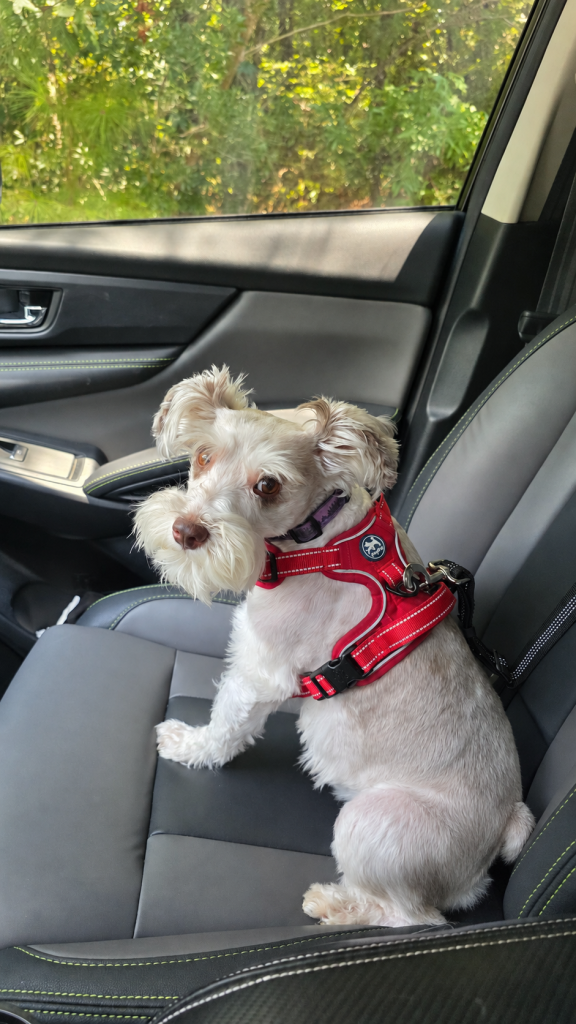
We also do not want vehicle restraint to become something we consider only after everyone is packed and ready to leave. Families should choose an appropriate restraint or carrier for their individual dog and vehicle, verify the fit, and follow the product manufacturer’s installation and use instructions.
One option for families comparing vehicle-restraint arrangements is:
Dog Seat Belt (paid link):
https://amzn.to/3QSpu5R
The availability of a particular product does not mean it will be appropriate for every dog or vehicle. The dog’s size, equipment fit, product design, installation requirements, and vehicle seating arrangement all matter.
4. Planning the Drive Around Mileage Instead of the Dog
Long road trips became easier for our family once we stopped thinking only about the number of miles remaining.
We generally plan to stop approximately every two to three hours, but we also remain flexible. When choosing a stop, we prioritize a safe location with clean restrooms, easy fuel access, and grass or another suitable place where Angel can walk.
Getting out of the vehicle allows all of us to stretch our legs, and giving Angel time to walk around makes the trip more enjoyable. We would rather stop when it makes sense for her than continue driving simply because we have not reached a predetermined mileage goal.
Before a long drive, we also consider:
- When Angel last ate
- When she was last outside
- Whether she has had an opportunity to walk
- The weather at our planned stops
- How long the next section of the drive may take
- Whether traffic could delay our arrival
Young dogs, older dogs, dogs with medical conditions, and dogs that are uncomfortable in the car may need a different travel schedule.
Our long-drive routine is explained in more detail here:
How We Keep Our Schnauzer Comfortable on Long Drives:
https://travelersandaschnauzer.com/how-we-keep-our-schnauzer-comfortable-on-long-drives/
For trips along one of our frequently used routes, we also consider several places where we may be able to stop:
Pet-Friendly Stops Along I-26:
https://travelersandaschnauzer.com/pet-friendly-stops-along-i-26/
The fastest possible itinerary is not automatically the most comfortable itinerary when Angel is traveling with us.
5. Making Unnecessary Food Changes During a Trip
Travel already changes many parts of Angel’s day. Unless there is a reason to do otherwise, we prefer not to make her regular food another change at the same time.
We pack her food before leaving instead of assuming we can find the exact product at our destination. That becomes especially important when we are staying in a mountain area, camping away from larger stores, or traveling somewhere unfamiliar.
We also consider how the food will be stored. At a cabin or vacation rental, that may mean keeping it organized and out of Angel’s reach. Camping can require additional precautions based on campground rules and local wildlife guidance.
Dogs with dietary restrictions, medical needs, allergies, or a history of digestive problems may require additional preparation. Questions about changing a dog’s food or managing specific nutritional needs should be discussed with a licensed veterinarian rather than handled through last-minute experimentation during a trip.
6. Packing Medication Without Planning How We Will Manage It
Angel travels with medications, so this is one part of our packing routine that we take especially seriously.
Our goal is not simply to remember the medication. We also consider:
- Whether we have enough for the complete trip
- Whether an additional amount may be needed if our return is delayed
- How the medication must be stored
- Where it will remain during the drive
- Whether we need prescription or veterinary information
- How quickly we could reach it if needed
Medication packed underneath luggage may be difficult to retrieve during a roadside stop. We keep essential medication where we can reach it without unloading the vehicle.
We do not begin, stop, or change Angel’s medication routine for travel without veterinary guidance.
Our more detailed experience is available here:
Traveling With Medications for Our Schnauzer:
https://travelersandaschnauzer.com/traveling-with-medications-for-our-schnauzer/
Medication deserves its own check on the final packing list. It is too important to rely on remembering it while loading luggage and last-minute supplies.
7. Packing Only for the Forecast
Mountain travel has taught us to expect changing conditions. We do not want to bring half the house, but we consider what Angel would need if the weather is warmer, colder, or wetter than expected.
Depending on the trip, that may include:
- Extra water
- Towels
- Appropriate rain protection
- Paw protection suitable for the conditions
- Dry bedding
- An indoor option if outdoor plans change
Weather can affect pavement temperatures, trails, driving conditions, outdoor seating, and access to attractions. We check current conditions close to departure rather than relying only on what the forecast predicted when we first planned the trip.
This flexibility is also important when we are camping. We prefer to know what we can do at the campsite before rain changes our plans:
Rainy Day Activities While Camping With a Dog:
https://travelersandaschnauzer.com/rainy-day-activities-while-camping-with-a-dog/
The mistake we try to avoid is creating a schedule that works only if the weather cooperates.
8. Packing Emergency Supplies Where We Cannot Reach Them
An emergency kit hidden underneath luggage is technically packed, but it is not very useful when we need something quickly.
We prefer essential supplies to have a predictable and accessible place in the vehicle. Saline solution and tweezers have already proved useful for us when dealing with a splinter from a deck and sand spurs during a Myrtle Beach trip. Those experiences reinforced why we want practical supplies available rather than buried beneath our other luggage.
Our dog-travel emergency supplies may include:
- Basic first aid supplies
- Veterinary contact information
- Information for an emergency veterinary clinic near the destination
- Important medication details
- A recent photograph of Angel
- Identification information
- Water and a bowl
- A backup leash
- Cleanup supplies
Families assembling emergency supplies may want to consider a preassembled pet first aid kit as a starting point. The contents should still be reviewed and adjusted for the individual dog and type of trip.
Pet First Aid Kit (paid link):
https://amzn.to/4vmig9r
Our more detailed emergency checklist is available here:
Pet Travel Emergency Kit Checklist: What We Keep Ready for Angel
https://travelersandaschnauzer.com/pet-travel-emergency-kit-checklist/
A kit cannot prepare us for every possible emergency, but keeping basic information and supplies together removes one unnecessary complication.
9. Assuming Every Stop in a Dog-Friendly Destination Allows Dogs
A town may be known as a dog-friendly destination while individual attractions, trails, beaches, restaurants, and indoor spaces have completely different policies.
Instead of assuming Angel can join us everywhere, we look at the places we actually intend to visit.
We check questions such as:
- Are dogs allowed?
- Are they permitted throughout the property or only in designated areas?
- Are there leash requirements?
- Are there seasonal restrictions?
- Does an outdoor restaurant permit dogs in its seating area?
- Is there a backup activity if Angel cannot join us?
We verify changing details with the individual attraction, park, business, or official provider before relying on them.
That extra step is much easier than reorganizing an entire day after arriving and discovering that Angel cannot participate.
10. Expecting Our Dog to Adjust Immediately
Arrival day is exciting for us, but Angel is entering a completely unfamiliar environment.
New smells, unusual sounds, different doors, stairs, outdoor areas, and sleeping arrangements can all be part of the first few hours.
We have found that giving Angel time to settle works better than immediately filling the schedule. We establish the basics first:
- Where her water will be
- Where she will eat
- Where she will sleep
- How we will take her outside
- Which doors and walking areas we will use
- What the immediate surroundings are like
Familiar items can also make the new location feel less different.
Our complete settling-in routine is available here:
How We Help Our Schnauzer Adjust to New Places While Traveling:
https://travelersandaschnauzer.com/how-we-help-our-schnauzer-adjust-to-new-places/
What works for Angel reflects her own temperament, health needs, routine, and travel experience. Another dog may need additional time, different accommodations, or a different approach.
Health concerns can sometimes affect a dog’s behavior or comfort. Persistent anxiety, destructive behavior, excessive barking, or other behavioral difficulties may warrant guidance from a licensed veterinarian, qualified professional dog trainer, or veterinary behaviorist.
The goal is not to force a dog to fit a particular vacation schedule. It is to create a trip that works for the family and the dog traveling together.
11. Planning Only for the Trip We Hope to Have
Our final mistake applies to almost every kind of travel: leaving home without a backup plan.
We cannot control changing weather, attraction closures, traffic, maintenance problems, or unexpected changes in pet policies. We can decide how prepared we will be if something changes.
Before leaving, we like to know:
- Where the nearest veterinary care is located
- Where we could purchase pet supplies
- Which outdoor activity could replace our first choice
- What we could do if weather changes
- Which parts of the itinerary can be rearranged
- What we would do if Angel needs a quieter day
A backup plan does not need to be complicated. Knowing one or two alternatives in advance can make an unexpected change feel much more manageable.
Our Simple Pre-Trip Mistake Check
Before we consider the dog portion of our packing complete, we review the trip in three layers.
Reservation and destination: Have we verified the pet rules that actually affect this trip?
Angel’s routine: Do we have what she needs for food, medication, comfort, walks, and the drive?
Backup plan: What will we do if weather, policies, timing, or our itinerary changes?
This catches more potential problems than simply asking whether we packed everything. It also keeps our attention on making the trip comfortable and manageable instead of bringing as much dog gear as possible.
Frequently Asked Questions
How far in advance should we pack for a trip with a dog?
We prefer to start with a checklist several days before departure instead of trying to remember everything while loading the vehicle. Items that cannot be packed early can be added to a final departure checklist.
What should we do if a property’s pet policy is unclear?
Contact the property or booking provider before completing the reservation. Ask about the specific rule that affects your trip and save any important information with the rest of your booking details.
Should we bring veterinary records while traveling?
Requirements vary by destination, transportation provider, and accommodation. We prefer to keep important veterinary and medication information accessible rather than trying to retrieve it unexpectedly while away from home. Verify any specific documentation requirements before traveling.
What dog supplies should remain easy to reach in the vehicle?
We prioritize water, a bowl, leash and walking supplies, waste bags, important medications, identification information, cleanup supplies, and basic emergency items. The exact list should reflect the needs of the individual dog and trip.
What should a dog-travel backup plan include?
Consider alternative activities, changing weather, emergency veterinary care, nearby pet-supply locations, schedule flexibility, and what you would do if an attraction or accommodation changes its pet policy.
Before You Go
Pet policies, operating hours, reservations, campground rules, attraction access, weather conditions, and other travel details can change. Verify the information that matters to your trip directly with the applicable accommodation, attraction, campground, business, park, or other official provider before leaving home.
Disclosures and Important Information
Product Recommendation Notice: Products recommended throughout this article are selected because we believe they may be helpful for families traveling with their dogs. Recommendations are based on our experiences where applicable, general travel knowledge, product research, and suitability for the topic. Readers should evaluate products to determine what best meets their individual needs.
Travel Information Disclaimer: Travel information is provided for general planning purposes only. Regulations, policies, pet requirements, availability, admission fees, weather conditions, and operating hours may change. We recommend confirming current information directly with the applicable business, attraction, campground, airline, or government agency before traveling.
Veterinary Disclaimer: The information provided in this article is intended for general educational and informational purposes only and should not be considered veterinary advice. Every dog has unique health needs. Always consult your licensed veterinarian regarding questions about your pet’s health, medications, allergies, nutrition, or medical care before making changes to your pet’s routine or treatment plan.
Safety Disclaimer: Every travel situation is unique. Always exercise good judgment, follow posted rules, comply with local laws, monitor weather conditions, and prioritize the safety of yourself, your family, and your pets. Travelers and a Schnauzer is not responsible for decisions made based on the information contained in this article.
Emergency Preparedness Disclaimer: Emergency preparedness recommendations are intended to improve readiness but cannot anticipate every situation. Evaluate your family’s individual needs, local conditions, and applicable emergency guidance when preparing for travel or emergencies.
Pet Travel Disclaimer: Every pet has different needs, abilities, and comfort levels while traveling. Evaluate your dog’s health, temperament, and travel readiness before each trip, and verify current pet policies with transportation providers, accommodations, attractions, and campgrounds before departure.
Product Information Disclaimer: Product features, specifications, availability, warranties, and manufacturer recommendations may change over time. Always review the manufacturer’s official information before purchasing or using any product discussed on this website.
Final Thoughts
The biggest change we have made as we have traveled more with Angel is that we no longer think of dog-travel preparation as simply another packing list.
It is a series of small decisions: checking the property before booking, thinking through the drive, packing around Angel’s routine, bringing backup walking equipment, keeping important supplies accessible, and knowing what we will do if the original plan changes.
Those habits cannot eliminate every surprise. They can make many preventable problems far less likely.
When we arrive, we can spend less time fixing problems we could have avoided and more time enjoying the trip together.
Leave a Reply